Big Tech Is Spending $725 Billion on AI in 2026 — Here's Where the Money Goes
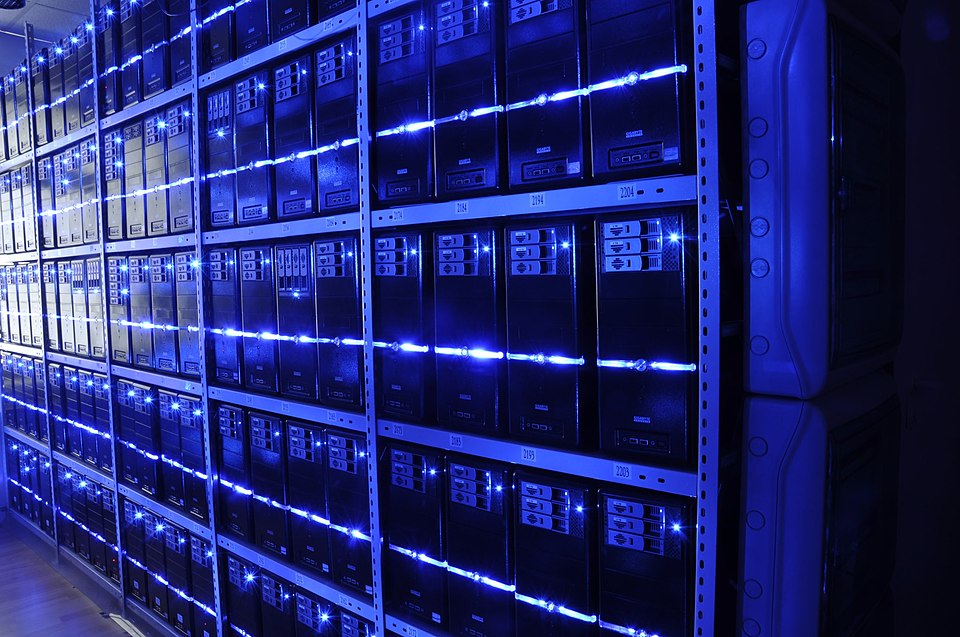
Meta, Amazon, Microsoft, and Google are pouring a combined $725 billion into AI infrastructure in 2026 — a 75% jump from last year. Microsoft leads at ~$200B, Amazon at ~$190B, Meta at ~$185B, and Google at ~$150B. The money flows into data centers, Nvidia GPUs, energy infrastructure, and talent. Nvidia alone captures roughly $40 billion of this wave.
$725 Billion Is a Number That Broke My Brain
I've been covering tech spending for years and I thought I was desensitized to large numbers. Then I calculated what $725 billion actually means and it broke something in my brain. That's more than the GDP of Sweden. More than the entire global film industry generates in five years. It's roughly $2 billion per day, every day, for 365 days. And it's being spent by four companies on one technology.
When I read Meta's Q1 earnings call and Zuckerberg casually mentioned $185 billion in planned capex, I had to pause the recording and walk around my apartment. Not because the number surprised me — we've been tracking the trajectory — but because of how normal he made it sound. Like spending the GDP of a small nation on AI infrastructure is just a line item now. Because for these companies, it is.
The Breakdown: Who Is Spending What on AI
| Company | 2026 AI Capex (est.) | 2025 AI Capex | YoY Change |
|---|---|---|---|
| Microsoft | ~$200B | ~$112B | +79% |
| Amazon | ~$190B | ~$105B | +81% |
| Meta | ~$185B | ~$108B | +71% |
| ~$150B | ~$90B | +67% | |
| Total | ~$725B | ~$415B | +75% |
The numbers are staggering, but the growth rate is what tells the real story. A 75% year-over-year increase isn't incremental investment. It's a war. These four companies have collectively decided that AI infrastructure is the most important thing they can spend money on, and they're willing to burn cash at a rate that would make investors in any other era panic.
Investors aren't panicking. Stock prices are up. That tells you everything about where Wall Street thinks the future is.
Where Does $725 Billion Actually Go?
I spent last week pulling apart earnings reports, investor presentations, and construction filings to figure out where this money actually lands. Here's the rough allocation:
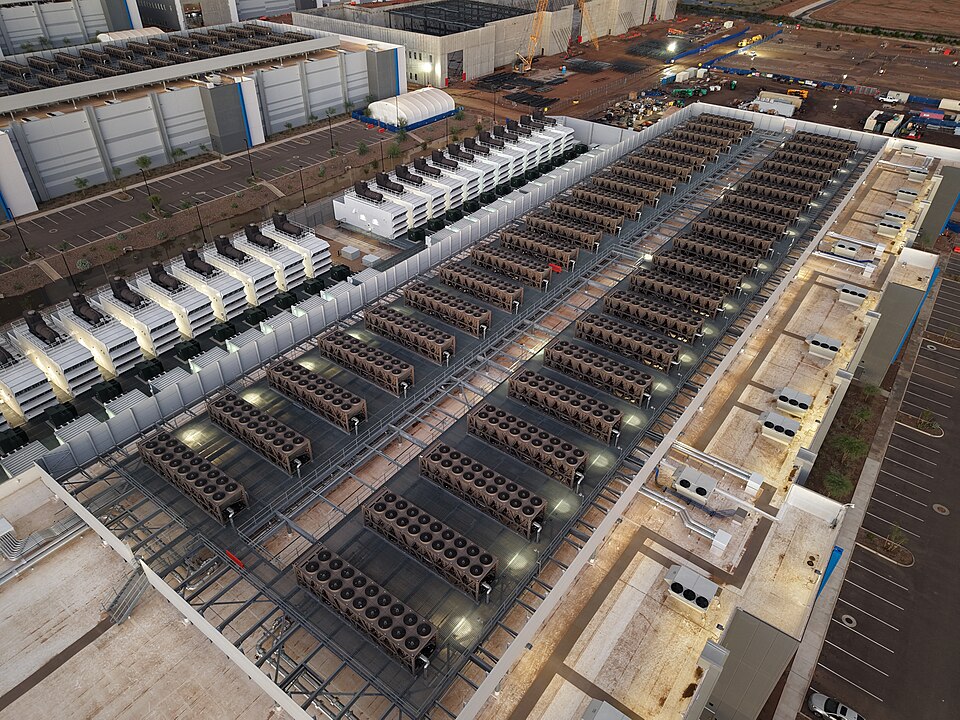
- Data center construction (~45%): About $326 billion is going into building and expanding data centers. Meta alone is constructing a new 2-gigawatt campus in Louisiana. Microsoft is building or expanding facilities in 15 countries. Amazon's data center footprint grew 40% in 2025 and is accelerating.
- GPU and chip procurement (~30%): Roughly $218 billion flows to semiconductors — primarily Nvidia, but also AMD, custom ASICs from Google (TPUs) and Amazon (Trainium/Inferentia). Nvidia's data center revenue is projected to hit $40 billion from these four buyers alone.
- Power infrastructure (~15%): Around $109 billion goes to energy — building power substations, signing long-term energy contracts, investing in nuclear and solar projects. Microsoft signed a deal to restart a Three Mile Island reactor specifically for AI workloads. That's not a metaphor. That actually happened.
- Talent and R&D (~10%): The remaining $72 billion covers AI researcher salaries (top researchers now command $5-10 million annual packages), research programs, and acquisitions of AI startups for their teams.
Nvidia Is the Real Winner and It's Not Even Close
Every conversation about big tech AI spending eventually becomes a conversation about Nvidia. The company's H200 and B100 GPUs are the oxygen supply for AI training, and all four of these companies are buying them as fast as Nvidia can manufacture them. The waitlist for B100 clusters is reportedly 9-12 months out.
I talked to a data center architect last month who described the current GPU market as "trying to buy a house in 2021 — everything is bidding war, everything is wait-listed, and everyone is overpaying." Nvidia's gross margins on data center GPUs are sitting around 78%. They're printing money in a way that makes the rest of Silicon Valley look like a lemonade stand. For more on the semiconductor angle, our breakdown of AMD's stock surge on agentic AI demand provides the other side of this story.
The Energy Problem Nobody Wants to Talk About
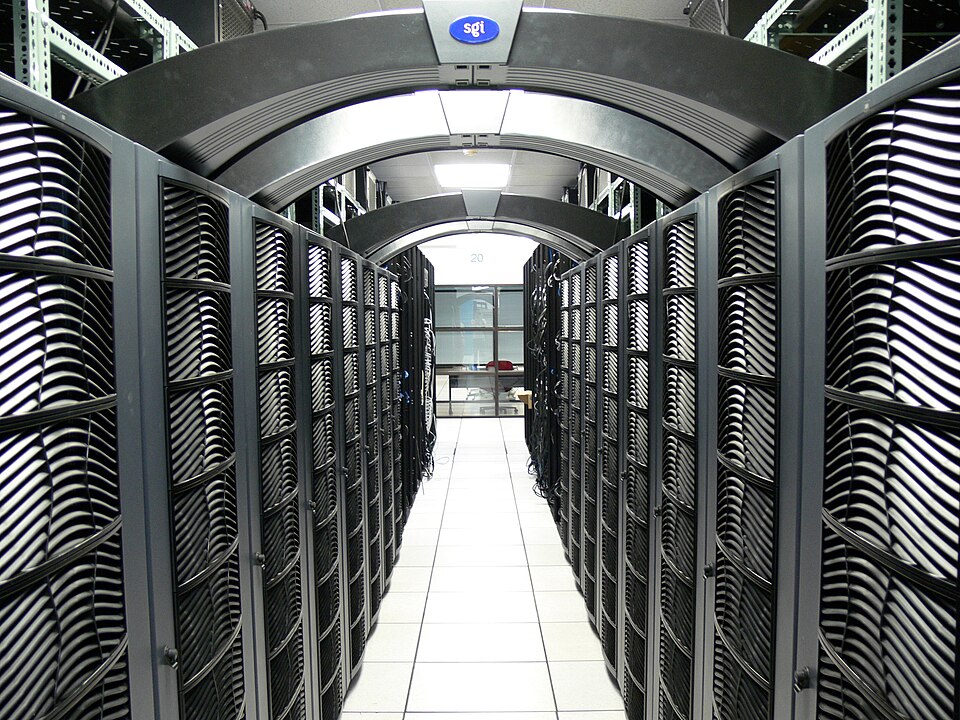
Here's the part that keeps me up at night. Training a single frontier AI model now requires roughly 100 megawatts of sustained power for months. A large AI data center campus consumes 1-2 gigawatts — that's enough to power a city of 750,000 people. And these companies are building dozens of them.
The International Energy Agency estimates that data center electricity consumption will double between 2025 and 2028, from 460 TWh to over 900 TWh. That's roughly equivalent to Japan's entire electricity consumption. And AI workloads are the primary driver.
Microsoft restarting a nuclear reactor for AI. Amazon signing a $650 million deal for nuclear power from Talen Energy. Google investing in small modular reactors. Meta buying solar farms. These aren't green PR stunts — they're desperate attempts to secure enough electricity to keep the AI buildout on schedule. The grid can't keep up, and that's becoming a genuine constraint on how fast AI can scale.
What This Means for the Rest of Us
I'll be honest: the implications of $725 billion in AI spending make me feel equal parts excited and uneasy. On the positive side, this investment is creating hundreds of thousands of construction jobs, driving demand for renewable energy, and funding research that could lead to breakthroughs in science and medicine.
On the concerning side, this level of concentration — four companies controlling the AI infrastructure that everything else will be built on — creates a dependency that should worry everyone. If your startup, your employer, or your government wants to use AI in 2026, you're almost certainly renting compute from one of these four companies. That's not a market. That's a tollbooth.
The copyright question looms large too. These models are trained on the creative output of millions of people who never consented to it. The publishers suing Meta over AI copyright is just the beginning of a legal reckoning that could reshape how this $725 billion investment actually pays off.
Related Stories
AMD Stock Surges on AI Agentic Demand in 2026 Publishers Sue Meta Over AI Copyright in 2026Frequently Asked Questions
How much are big tech companies spending on AI in 2026?
The four largest tech companies — Meta, Amazon, Microsoft, and Google — are spending a combined $725 billion on AI infrastructure and capital expenditures in 2026. This represents a roughly 75% increase over their combined 2025 spending of approximately $415 billion.
Which company is spending the most on AI in 2026?
Microsoft leads with approximately $200 billion in planned AI capital expenditure for 2026, followed by Amazon at ~$190 billion, Meta at ~$185 billion, and Google at ~$150 billion. All four companies significantly increased their AI budgets compared to 2025.
Where is the $725 billion in AI spending going?
Roughly 45% goes to data center construction and expansion, 30% to GPU and chip procurement (primarily Nvidia), 15% to power infrastructure and energy deals (including nuclear and solar projects), and 10% to AI talent recruitment and research.
How much is Nvidia benefiting from big tech AI spending?
Nvidia is projected to capture approximately $40 billion in revenue from big tech AI infrastructure spending in 2026. The company's H200 and B100 data center GPUs power nearly every major AI training cluster, and demand far exceeds current supply with waitlists stretching 9-12 months.
Will big tech AI spending create or eliminate jobs?
Both. The data center construction boom is creating hundreds of thousands of construction and operations jobs. At the same time, AI automation is displacing roles in customer service, content moderation, basic coding, and data entry. Most economists project a net neutral to slightly positive job impact through 2028, though the distribution of gains and losses will be uneven.