Boston Dynamics Atlas Robot Goes Into Production with Google Gemini AI — What It Actually Means
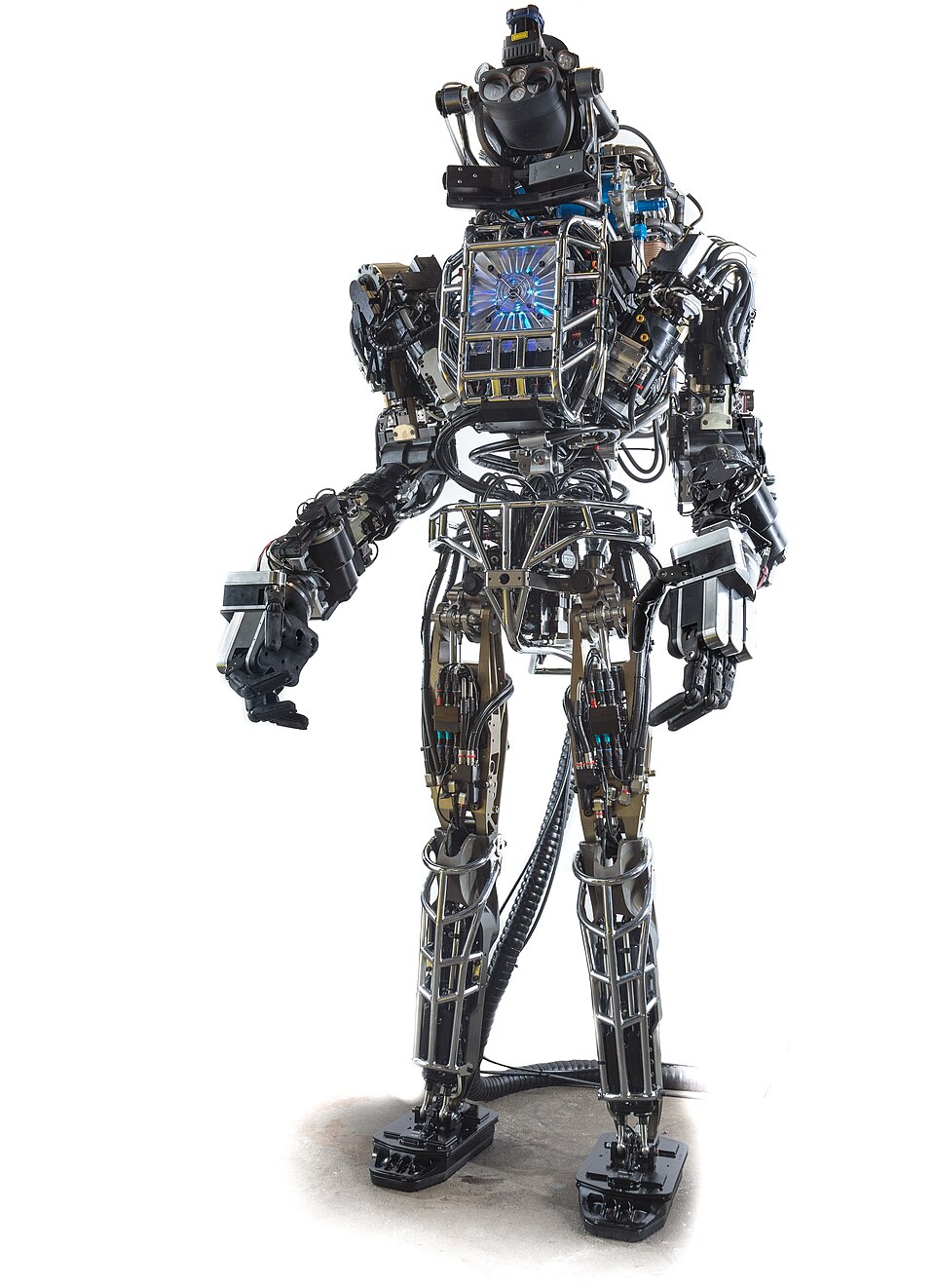
The Boston Dynamics Atlas Gemini robot is officially entering production in 2026. Standing 6.2 feet tall, weighing 198 pounds, and powered by 56 degrees of freedom, Atlas now runs on Google's Gemini Robotics AI. First units ship to Hyundai factories this year, with production scaling to 30,000 units annually by 2028. The humanoid robot era isn't coming — it just arrived.
I Watched Atlas Pick Up a Wrench and I Haven't Stopped Thinking About It
Let me set the scene. The Boston Dynamics demo reel dropped Tuesday morning, and within the first 30 seconds, Atlas walks into a messy Hyundai assembly area, scans the environment, picks up a wrench from a pile of tools, walks to a partially assembled chassis, and tightens a bolt. No pre-programmed path. No operator with a joystick. It just... figured it out.
I've been covering robotics for years, and I've seen plenty of impressive demos that turned out to be carefully staged theater. This felt different. The way Atlas corrected its grip when the wrench slipped slightly — that micro-adjustment — told me the Gemini integration is doing something genuinely new. This isn't a scripted routine. It's a machine reasoning about physical space in real time.
The Specs That Actually Matter for the Boston Dynamics Atlas Gemini Robot
| Specification | Detail |
|---|---|
| Height | 6.2 ft (1.88 m) |
| Weight | 198 lbs (90 kg) |
| Degrees of Freedom | 56 DOF |
| AI Platform | Google Gemini Robotics |
| Payload Capacity | 55 lbs (25 kg) |
| Battery Life | ~4 hours continuous operation |
| First Customer | Hyundai Motor Group |
| Production Target (2028) | 30,000 units/year |
The 56 degrees of freedom number is the one that made me sit up. For context, a human body has about 244 DOF. Most humanoid robots operate with 20-30. Atlas at 56 means its hands can do things like rotate a screwdriver, thread a cable, or adjust an object's orientation mid-grasp. That's not "robot arm" dexterity — that's approaching "human hand" dexterity.
Why Google Gemini Changes Everything About This Robot
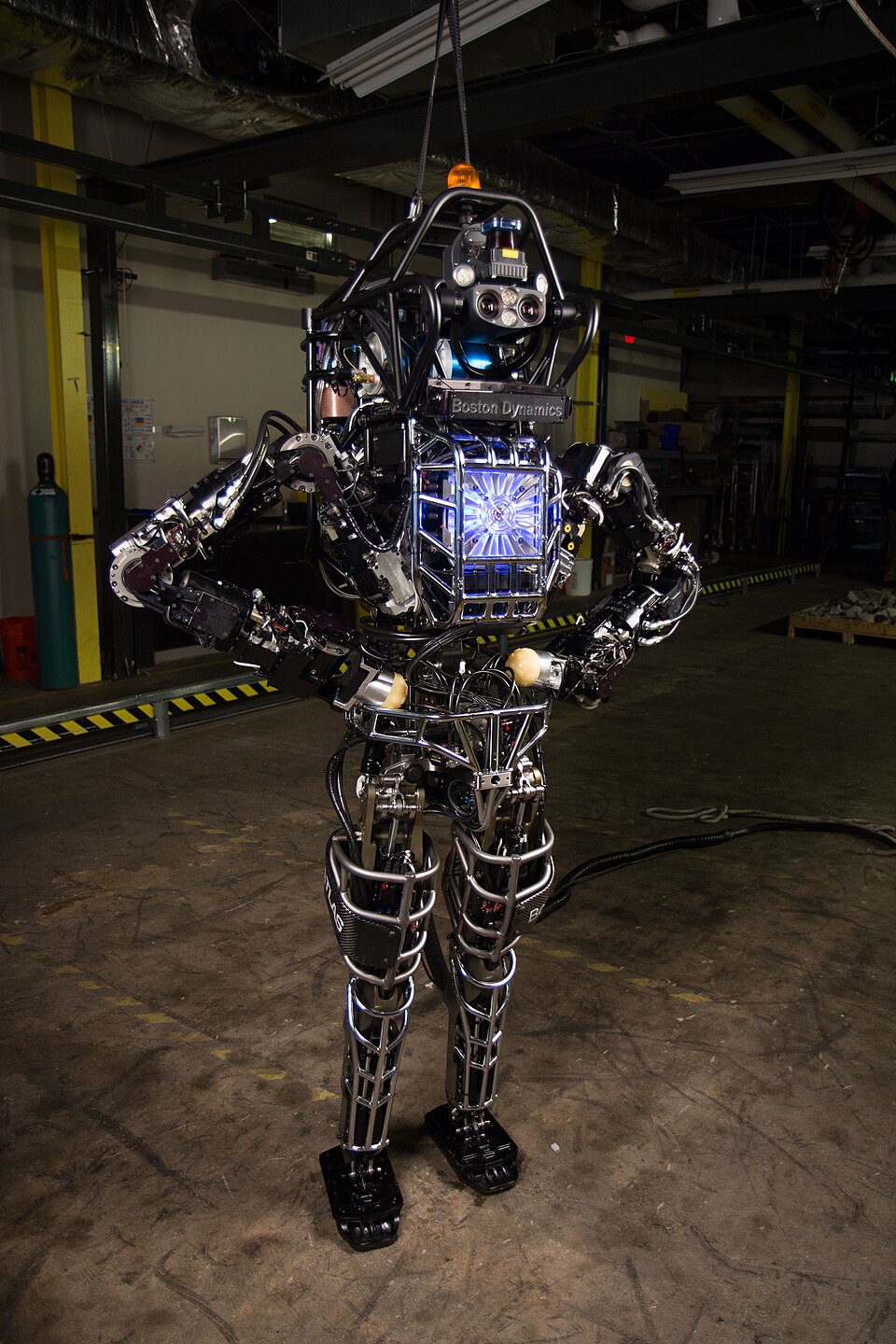
Old Atlas was impressive but dumb. It could do backflips, sure, but every movement was pre-choreographed by engineers. The Gemini Robotics integration fundamentally changes what Atlas is. Here's what Gemini actually gives it:
- Natural language commands: You tell Atlas what to do in plain English. "Go to the parts shelf, find the red connector, bring it to station 3." It parses that, plans the route, identifies the object, and executes.
- Visual reasoning: Atlas can look at an unfamiliar object and infer how to grasp it, how heavy it probably is, and whether it's fragile. This is Gemini's multimodal understanding in physical form.
- Error recovery: Drop something? Atlas re-plans. Path blocked? It finds another way. This adaptive behavior is what separated lab demos from real-world usefulness, and Gemini closes that gap.
- Learning from demonstration: Show Atlas how to do a task once, and it generalizes to similar tasks. This is the scalability breakthrough — you don't need to program every action.
I'm going to say something that might sound hyperbolic but I believe it completely: Gemini Robotics is to Atlas what the iPhone was to the smartphone concept. The hardware existed before. The software made it matter.
The Hyundai Deal: This Is How Humanoid Robots Enter the Real World
Hyundai owns Boston Dynamics, so the first deployment being in Hyundai factories isn't a surprise. What's interesting is the scale. Initial deployment is "dozens" of units in 2026, but the 30,000 units per year by 2028 target tells you Hyundai sees this as a core manufacturing strategy, not a pilot program.
Here's what gets me excited and nervous in equal measure: at 30,000 units annually, the per-unit cost drops dramatically. Boston Dynamics hasn't announced pricing, but industry estimates put early units around $150,000-$250,000. At scale, that number could drop below $100,000. For a robot that works 20-hour shifts without breaks, sick days, or overtime — that math gets real uncomfortable, real fast.
I don't think this replaces factory workers overnight. But I do think anyone who says "robots won't take manufacturing jobs" is not paying attention to what 56 DOF and Gemini Robotics can do together. The timeline isn't 20 years. It's 5.
What the Boston Dynamics Atlas Gemini Robot Can't Do (Yet)
Before we get carried away — and trust me, I'm tempted — here's the reality check:
- Battery life is still limiting. Four hours of continuous operation means frequent charging cycles. In a 24-hour factory, you need three Atlas units to cover one position, plus charging infrastructure.
- Unstructured outdoor environments are still hard. Atlas excels in factory floors where surfaces are flat and lighting is controlled. Construction sites, warehouses with uneven floors, outdoor terrain — these remain challenging.
- Fine motor tasks below 2mm precision. Atlas can handle wrenches and connectors, but tasks requiring sub-millimeter precision (electronics assembly, surgical assistance) are still beyond reach.
- Cost at current scale. A quarter-million dollars per unit with 4-hour battery life doesn't pencil out for most businesses. The 2028 scaling target is where the economics actually work.
These limitations are real, but here's my honest assessment: every single one of them is an engineering problem, not a physics problem. Engineering problems get solved. Usually faster than anyone predicts.
Related Stories
AMD Stock Surges on AI Agentic Demand in 2026 Fitbit Air Goes Screenless as Google Rebrands to Google HealthFrequently Asked Questions
What is the Boston Dynamics Atlas Gemini robot?
The Boston Dynamics Atlas is a humanoid robot standing 6.2 feet tall and weighing 198 pounds, with 56 degrees of freedom for human-like mobility and dexterity. In 2026, it is powered by Google's Gemini Robotics AI, which gives it natural language understanding, visual reasoning, and adaptive task execution.
When will Atlas be available for commercial use?
Atlas is entering limited production in 2026, with initial units shipping to Hyundai manufacturing facilities. Boston Dynamics targets 30,000 units per year by 2028. Broader commercial availability beyond Hyundai has not been officially announced yet.
How does Google Gemini AI power the Atlas robot?
Gemini Robotics provides Atlas with multimodal AI capabilities — processing visual, audio, and language inputs simultaneously. This allows the robot to understand spoken commands, recognize objects it hasn't seen before, plan multi-step tasks, and recover from errors without human intervention.
What tasks can the Atlas robot perform?
Atlas can walk, run, climb stairs, carry loads up to 55 pounds, and manipulate tools and objects with its hands. With Gemini AI, it can follow verbal instructions, sort and identify objects, perform assembly tasks, and adapt to changing environments in real time.
How much will the Boston Dynamics Atlas cost?
Official consumer pricing hasn't been announced. Industry analysts estimate initial commercial units cost $150,000-$250,000 each. As production scales to 30,000 units per year by 2028, per-unit costs are expected to drop below $100,000, making the economics viable for large-scale manufacturing deployment.