Monaco Grand Prix 2026 Preview: Schedule, Favorites, and What Makes It Special
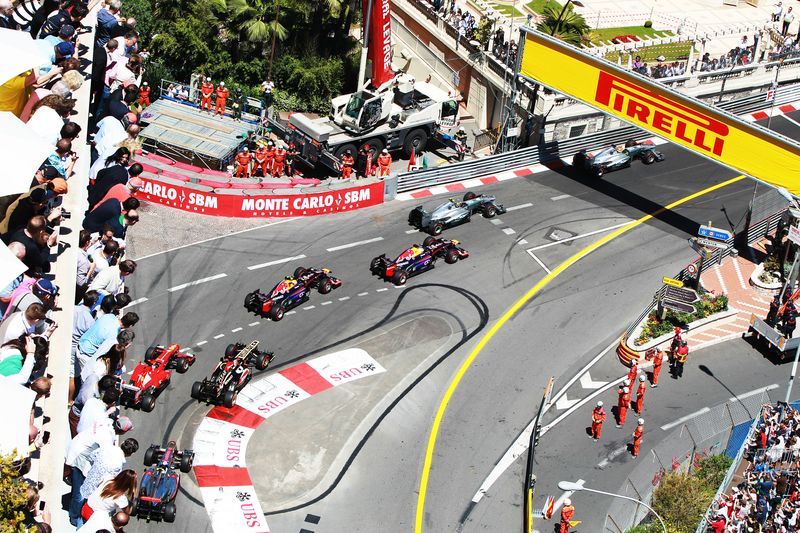
The Monaco Grand Prix 2026 preview starts with this: the race weekend runs June 4-7 on the legendary Circuit de Monaco in Monte Carlo. Under the new 2026 regulations featuring lighter, narrower cars, this year's edition could be the most unpredictable Monaco race in a decade. Charles Leclerc is the sentimental favorite on home soil, but Max Verstappen and Lando Norris are right there.
Why Monaco Still Matters When Everyone Says It Shouldn't
I hear the same complaint every single year: "Monaco is boring, you can't overtake, it's just a parade." And every single year, I watch it anyway, heart rate spiking through the tunnel section, screaming at my screen when someone clips the barrier at the swimming pool chicane. The critics aren't wrong about the overtaking problem. They're wrong about everything else.
Monaco isn't a race in the traditional sense. It's a 78-lap qualifying session where one mistake ends your day. The mental pressure is unlike anything else on the calendar. Drivers thread a 2-meter-wide car through gaps that look physically impossible at 260 km/h, with concrete walls instead of gravel traps. That's not boring — that's terrifying, and terrifying is the entire point.
Monaco Grand Prix 2026 Schedule: Key Times and Sessions
Monaco uniquely runs on a Thursday-Sunday format instead of the standard Friday-Sunday. Here's the full Monaco Grand Prix 2026 preview schedule:
| Day | Session | Time (Local / CET) |
|---|---|---|
| Thursday, June 4 | Free Practice 1 | 13:30 |
| Thursday, June 4 | Free Practice 2 | 17:00 |
| Friday, June 5 | Rest Day | — |
| Saturday, June 6 | Free Practice 3 | 12:30 |
| Saturday, June 6 | Qualifying | 16:00 |
| Sunday, June 7 | Race (78 laps) | 15:00 |
That Friday gap is pure Monaco. No other race gets a rest day. The teams use it for sponsor events, yacht parties, and trying to figure out setups on a circuit where data from other tracks is basically useless.
Top Contenders: Who Wins in Monte Carlo This Year?
Let me give you my honest picks, no hedging:
- Charles Leclerc: The hometown hero who finally broke his Monaco heartbreak in 2024. He knows these streets like his childhood bicycle route — because it literally was. The 2026 car suits him. I'm putting him as my top pick, and I don't care if that's emotional rather than analytical.
- Max Verstappen: The best driver on the grid, full stop. Monaco has historically been his weakest event relative to his dominance everywhere else, but the new regulations could change that. If qualifying goes his way, good luck getting past him.
- Lando Norris: McLaren has been phenomenal in slow-speed corners this season. Norris has the talent and finally the car. My dark horse for the podium who could easily steal the win.
- Lewis Hamilton: I know, I know. But Hamilton at Ferrari, racing in Monaco, with these new regs? The romantic in me can't count him out. He won here six times — the track knowledge doesn't evaporate.
How the 2026 Regulations Change Monaco
This is the part most Monaco Grand Prix 2026 preview articles are missing. The 2026 reg overhaul isn't just about straight-line speed — it fundamentally changes how cars behave through slow corners, and Monaco is nothing but slow corners.
The cars are lighter by roughly 30 kg and narrower than the 2025 generation. At Monaco, where you're constantly fighting the car through tight transitions, less weight means more responsive handling. The increased electrical power component means better traction out of the Fairmont hairpin and Rascasse. In theory, this should produce closer racing.
In practice? I think qualifying becomes even more important. The narrower cars might technically create passing opportunities, but the barriers are still in the same place, and drivers won't risk a retirement for a marginal gap. Strategy — specifically the undercut — remains the primary "overtaking" move at Monaco.
The Circuit: 3.337 km of Beautiful Chaos
For anyone watching their first Monaco race, here's what makes the Circuit de Monaco unique:
- Sainte Devote (Turn 1): The uphill first corner where first-lap chaos lives. Hit the barrier here and your race is done before it starts.
- Casino Square: The most glamorous section of any racetrack on Earth. Cars crest the hill, get light on their suspension, then dive downhill. It looks gentle on TV. It's violent in person.
- The Tunnel: You go from blinding Mediterranean sunlight into darkness at 260 km/h, then brake immediately for the chicane. Drivers' pupils literally can't adjust fast enough. It's insane that this is allowed.
- The Swimming Pool Chicane: Flat-out through barriers that are close enough to scrape your mirrors. This is where the brave separate themselves from the fast.
- Rascasse and Anthony Noghes: The final two corners before the start-finish straight. Painfully slow, desperately technical, and where Michael Schumacher once famously "parked" his car in qualifying.
Related Stories
FIFA World Cup 2026 Complete Guide: Everything You Need to Know UEFA Euro 2026 Preview GuideFrequently Asked Questions
When is the Monaco Grand Prix 2026?
The Monaco Grand Prix 2026 takes place from June 4-7, 2026. Practice begins Thursday June 4, qualifying is Saturday June 6, and the race is Sunday June 7 at 15:00 local time (CET).
Who is the favorite to win the Monaco Grand Prix 2026?
Max Verstappen is the overall championship favorite, but Charles Leclerc is widely tipped for Monaco specifically. Leclerc broke his Monaco curse in 2024 and knows the home circuit intimately. Lando Norris in the McLaren is a strong dark horse contender.
How long is the Monaco F1 circuit?
The Circuit de Monaco is 3.337 km (2.074 miles) per lap, making it the shortest track on the F1 calendar. The race covers 78 laps for a total distance of approximately 260.286 km (161.734 miles).
Why is overtaking so difficult at Monaco?
Monaco's narrow streets average about 10 meters wide, with concrete barriers replacing the runoff areas found at purpose-built circuits. The lack of long straights eliminates DRS effectiveness, and the tight, twisty layout means there's simply no room to pull alongside another car safely.
What do the 2026 F1 rule changes mean for Monaco?
The 2026 regulations bring lighter, narrower cars with more electrical power. At Monaco, this translates to better handling through slow corners and improved traction. While the narrower cars could theoretically create more passing room, the tight barriers still make overtaking extremely risky.