How to Follow Formula 1: A Complete Beginner's Guide to F1 Racing
Formula 1 is the world's premier open-wheel racing series, featuring 20 drivers across 10 teams competing in roughly 24 races per season on circuits around the globe. Each race weekend includes practice sessions, qualifying, and the main Grand Prix. To start following F1, pick a race on ESPN or F1 TV Pro, learn a few key terms like DRS and pit strategy, and choose a driver or team to root for. The 2026 season is an ideal entry point thanks to sweeping regulation changes that have leveled the playing field.
What Is Formula 1?
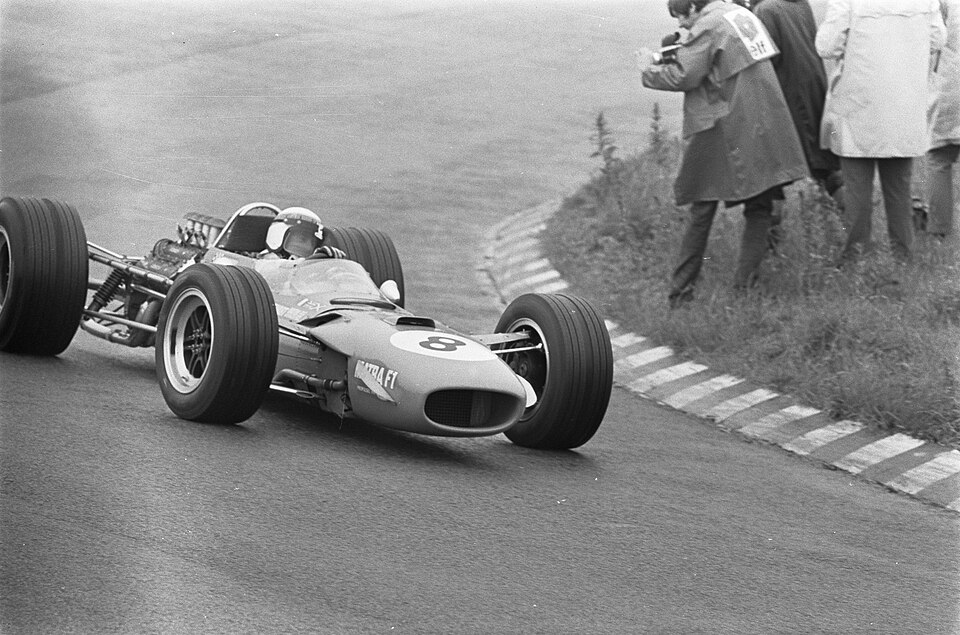
Formula 1 (F1) is the highest class of international single-seater auto racing, sanctioned by the FIA (Federation Internationale de l'Automobile). The "formula" refers to a set of rules all cars must follow -- think of it as the rulebook that defines how fast, how heavy, and how powerful these machines can be.
Unlike NASCAR, where cars look similar to production vehicles and race mostly on ovals, F1 cars are purpose-built open-cockpit machines that race on a mix of permanent circuits (like Silverstone in England) and temporary street courses (like the Monaco Grand Prix). These cars generate enough downforce to theoretically drive upside down on a ceiling at high speed. They accelerate from 0 to 100 mph in about 4 seconds and reach top speeds above 200 mph.
The sport has a global footprint, with races held across Europe, Asia, the Americas, the Middle East, and Australia. It is the most-watched annual motorsport series in the world, drawing over 1.5 billion cumulative TV viewers per season.
How an F1 Race Weekend Works
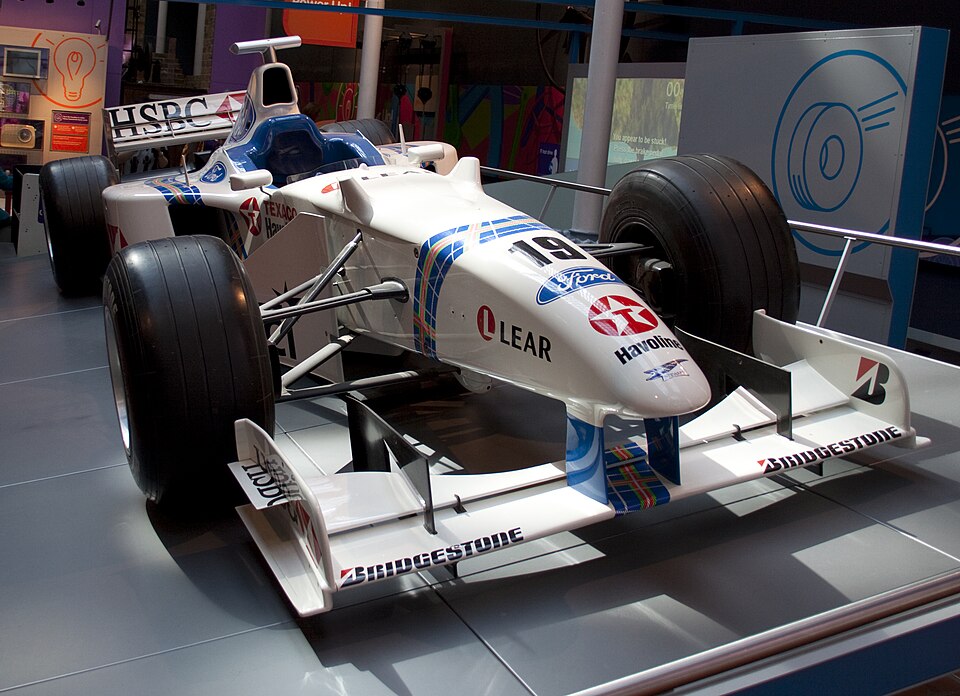
A standard F1 race weekend spans three days. Here is what happens at each stage:
| Session | Day | Purpose | Duration |
|---|---|---|---|
| Free Practice 1 (FP1) | Friday | Teams test setups, tire compounds, and gather data | 60 min |
| Free Practice 2 (FP2) | Friday | Longer runs simulating race conditions | 60 min |
| Free Practice 3 (FP3) | Saturday | Final tuning before qualifying | 60 min |
| Qualifying (Q1/Q2/Q3) | Saturday | Determines grid positions; knockout format | ~60 min |
| Grand Prix (Race) | Sunday | The main event; ~305 km race distance | 90-120 min |
Some weekends feature a Sprint format instead -- a shorter 100 km race on Saturday that awards reduced points and sets the grid for the main race. Sprint weekends compress practice into fewer sessions.
Qualifying uses a three-part knockout system. In Q1, all 20 drivers set their fastest laps; the slowest five are eliminated. Q2 eliminates five more. The remaining 10 drivers battle in Q3 for pole position -- the coveted first starting spot on the grid.
Key Teams and Drivers to Know in 2026
F1 has 10 teams, each running two cars. The 2026 season is particularly exciting because new engine regulations have shaken up the competitive order. Here are the teams that matter most right now:
| Team | Power Unit | Key Fact |
|---|---|---|
| Red Bull Racing | Red Bull Powertrains / Ford | Dominant from 2022-2024; adapting to new PU regs with their first in-house engine |
| Mercedes-AMG | Mercedes | Won 8 consecutive Constructors' titles (2014-2021); pushing hard to reclaim the top |
| Scuderia Ferrari | Ferrari | F1's oldest and most iconic team; strong under the 2026 regulations |
| McLaren | Mercedes | Resurgent since 2024; one of the sport's most storied teams |
| Aston Martin | Honda | Big investment cycle; partnered with Honda for 2026 PU supply |
| Alpine | Renault | French manufacturer team; rebuilding phase |
| Williams | Mercedes | Historic team (9 Constructors' titles) working its way back up the grid |
| RB (Visa Cash App) | Red Bull Powertrains / Ford | Red Bull's junior team; develops young talent |
| Haas | Ferrari | American-owned team; smallest budget on the grid |
| Kick Sauber | Ferrari | Transitioning to become the Audi factory team |
Drivers to watch include Max Verstappen (four-time World Champion), Lewis Hamilton (seven-time champion, now at Ferrari), Lando Norris (McLaren's lead driver and a title contender), and Charles Leclerc (Ferrari's homegrown star). The 2026 grid also features several talented rookies stepping up from Formula 2.
Understanding the F1 Points System
Points determine both the Drivers' Championship and the Constructors' Championship. Here is how they are awarded for a standard Grand Prix:
| Finishing Position | Points |
|---|---|
| 1st | 25 |
| 2nd | 18 |
| 3rd | 15 |
| 4th | 12 |
| 5th | 10 |
| 6th | 8 |
| 7th | 6 |
| 8th | 4 |
| 9th | 2 |
| 10th | 1 |
| 11th-20th | 0 |
| Fastest Lap (if finishing top 10) | +1 bonus |
Sprint races award points on a reduced scale: 8 points for first, down to 1 point for eighth. The Constructors' Championship totals the points from both drivers on each team. This is arguably the more important title for teams because it directly determines how much prize money they receive -- the difference between finishing third and fourth in the Constructors' standings can be worth tens of millions of dollars.
How to Watch Formula 1
Your options depend on where you live:
- United States: ESPN broadcasts all sessions. F1 TV Pro ($9.99/month) offers every session live with driver onboard cameras and real-time data.
- United Kingdom: Sky Sports F1 carries all races live. Channel 4 shows select races free-to-air with highlights of the rest.
- Global: F1 TV Pro is available in most countries and is the single best investment for a new fan. You get live coverage, onboard cameras for every driver, full race replays, and the complete historical archive.
If you want to go deeper, the official F1 app provides live timing data during sessions, showing sector times, tire strategies, and gap intervals in real time. It is free for basic features, with premium tiers for advanced telemetry.
Essential F1 Terminology
F1 commentary can sound like a foreign language at first. Here are the terms you will hear most often:
| Term | What It Means |
|---|---|
| DRS | Drag Reduction System -- a rear wing flap that opens on straights to boost top speed, only available when within 1 second of the car ahead |
| Pit Stop | A stop in the pit lane to change tires and make adjustments; top teams do this in under 2 seconds |
| Undercut | Pitting before a rival to gain track position by running faster on fresh tires while they are stuck on old ones |
| Overcut | The opposite: staying out longer on old tires, hoping the rival gets stuck in traffic after pitting |
| Safety Car | A Mercedes-AMG GT that leads the pack at reduced speed after an incident; bunches the field together |
| Red Flag | Race stopped completely due to a serious incident or dangerous conditions; cars return to pit lane |
| Pole Position | First place on the starting grid, earned by setting the fastest time in qualifying |
| Grid Penalty | A starting position penalty for breaking rules (engine changes, causing collisions, etc.) |
| Blue Flag | Shown to a lapped car, warning them to let faster cars through |
| Formation Lap | The warm-up lap before the race start where drivers weave to heat their tires |
The 2026 Regulation Changes: Why This Season Is Special
The 2026 season marks one of the biggest technical shakeups in F1 history. The new power unit regulations fundamentally change how these cars are built and how they race:
- New engine formula: The power split is now roughly 50/50 between the internal combustion engine (ICE) and the electric motor (MGU-K). The previous generation was about 80/20. This makes F1 cars significantly more electrified.
- No more MGU-H: The complex Motor Generator Unit-Heat has been removed, lowering the barrier to entry for new manufacturers. This is partly why Ford, Honda (independently), and Audi have entered or re-entered F1.
- Sustainable fuels: All cars now run on 100% sustainable fuel, a major environmental step forward.
- Simplified aerodynamics: Cars are narrower, lighter, and designed to produce less turbulent air behind them, making overtaking easier for the following car.
The net effect: teams that dominated the old regulations do not automatically lead under the new ones. Every constructor started from a relatively blank slate, making the competitive pecking order genuinely unpredictable for the first time in years.
My Experience Getting Into F1
I got into Formula 1 the way millions of people did -- through Netflix's Drive to Survive. I remember watching the first episode during a quiet weekend in 2020, expecting a casual background show, and ending up binge-watching the entire first season in two days. What hooked me was not the racing itself at first -- it was the politics. The way team principals scheme, drivers manage their egos, and engineers obsess over tenths of a second felt like a high-stakes drama that happened to involve cars. My first live race was the 2022 United States Grand Prix in Austin, Texas. Standing at Turn 1 as twenty cars braked from 200 mph into a tight left-hander was genuinely disorienting -- the sound hits your chest, the speed is incomprehensible on TV, and you realize these drivers are operating at the absolute limit of human reaction time. I went in as a casual viewer and came out checking qualifying results at 8 AM on Saturday mornings. If you are on the fence about getting into F1, just watch one full race weekend -- practice, qualifying, and the race. The layers of strategy reveal themselves gradually, and before you know it, you have opinions about tire degradation.
Best Ways to Get Into F1 as a New Fan
If you want to go from curious to invested, here is the path I would recommend:
- Watch Drive to Survive on Netflix: It dramatizes the season, yes, but it gives you the human stories behind each team and driver. Watch seasons 1-3 for the best storytelling.
- Pick a driver: You do not need a reason. Pick someone whose personality or backstory appeals to you. Following one driver through a season gives you a narrative thread to hold onto.
- Follow F1 on social media: The official F1 YouTube, Instagram, and TikTok accounts post excellent short-form content -- team radio highlights, onboard laps, and post-race interviews.
- Play the F1 game: EA Sports' official F1 game series teaches you every circuit and helps you understand why certain corners are challenging.
- Listen to podcasts: Beyond the Grid (official F1 podcast) and Shift+F1 are both great for different levels of depth.
- Use the F1 app during a race: Live timing data on a second screen transforms the viewing experience. You can see tire strategies unfold in real time.
For broader sports coverage, check out our FIFA World Cup 2026 Ultimate Guide for another major event happening this year. And if you are interested in picking up a new skill during the off-season, our beginner's guide to investing applies the same kind of strategic thinking to personal finance.
Frequently Asked Questions
How many races are in a Formula 1 season?
A typical F1 season features 23-24 races (called Grands Prix) spread across five continents from March to December. The 2026 calendar includes races in countries like Australia, Japan, the United States, the United Kingdom, and Abu Dhabi. The exact number can vary slightly year to year based on scheduling and new venues.
What is the best way to watch Formula 1 in the United States?
In the US, ESPN broadcasts all F1 races live using the Sky Sports feed. For the most comprehensive experience, F1 TV Pro ($9.99/month or $79.99/year) gives you every session live, onboard cameras for all 20 drivers, real-time telemetry data, and access to the full race archive going back decades.
Do I need to understand engineering to enjoy Formula 1?
Not at all. You can enjoy F1 purely as a racing competition between drivers and teams. The technical side adds depth once you get hooked, but most fans start by picking a favorite driver and following their results. The drama between teammates, team politics, and championship battles are what keep most people watching.
What changed in the 2026 F1 regulations?
The 2026 regulations introduced a major overhaul of the power unit rules. The new engines split power roughly 50/50 between the internal combustion engine and the electric motor, making F1 cars significantly more electrified. Aerodynamic rules were also simplified to promote closer racing and more overtaking. Cars are narrower and lighter than the previous generation.
How long does a Formula 1 race last?
Most F1 races last between 90 minutes and two hours. The race distance is approximately 305 kilometers (190 miles), though Monaco is shorter at 260 km. There is a hard limit of two hours for any race, and three hours including red flag stoppages. Qualifying on Saturday takes about an hour.
Is Formula 1 a team sport or an individual sport?
Both. There are two championships awarded each season: the Drivers' Championship (individual) and the Constructors' Championship (team). Each team fields two drivers, and their combined points determine the Constructors' standings. A driver can win the Drivers' title even if their team does not win the Constructors' title, and vice versa.
What is the best F1 game or sim for beginners?
The official F1 game series by EA Sports (previously Codemasters) is the most accessible entry point. It has adjustable difficulty, driving assists for newcomers, and a career mode where you manage an entire season. For a more realistic simulation, iRacing and Assetto Corsa offer authentic physics but have a steeper learning curve.