Marvell Technology Stock Surges 32% After Jensen Huang's Trillion-Dollar Prediction
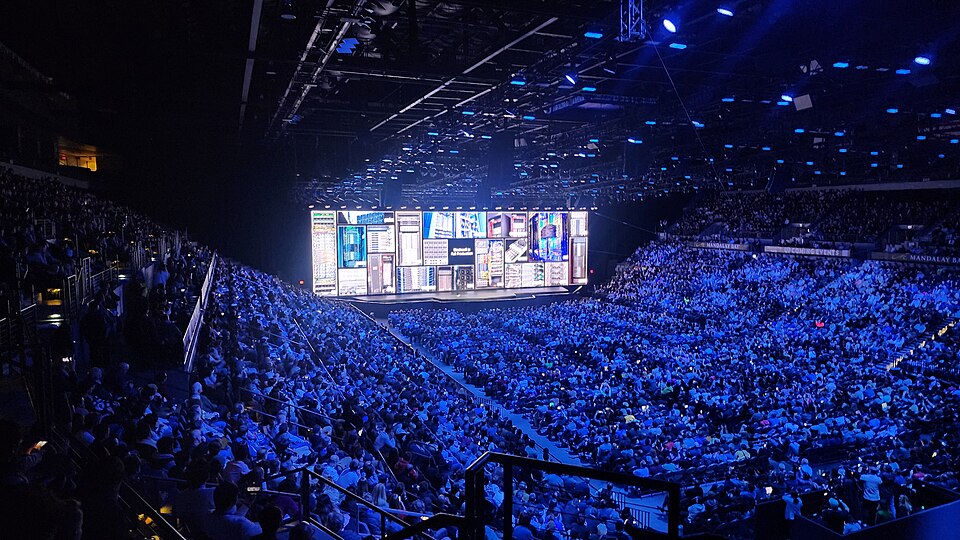
Marvell Technology (MRVL) exploded 32.52% higher on June 2, 2026 -- its biggest single-day gain in company history -- after Nvidia CEO Jensen Huang called it "the next trillion-dollar company" during Computex Week in Taipei. Nvidia backed up the words with a $2 billion investment in Marvell and photonic tech companies. The S&P 500 closed at a record 7,609.78, and honestly, Marvell stole the entire show.
What Did Jensen Huang Actually Say About Marvell?
Let me set the scene because the context matters as much as the quote itself. Jensen Huang -- the leather-jacket-wearing, GPU-empire-building CEO of the most valuable company on Earth -- stood on stage at Computex in Taipei and essentially crowned Marvell Technology as the next member of the trillion-dollar club. That's not a throwaway comment. When Jensen talks, the market listens. When Jensen points at a specific company, the market moves violently.
And move it did. A 32.52% single-day gain is the kind of price action you see maybe once or twice in a decade for a company of Marvell's size. This wasn't some micro-cap penny stock getting squeezed by Reddit. This was a legitimate, multi-billion-dollar semiconductor company ripping higher on the endorsement of the most influential figure in tech.
But here's what makes this different from a typical hype cycle: Nvidia didn't just talk. They invested. A $2 billion commitment to Marvell and photonic technology companies tells you that Jensen isn't speculating -- he's building the future supply chain for AI infrastructure, and he's decided Marvell is a critical piece of that puzzle.
Why Marvell Is the Unsung Hero of the AI Revolution
Most people hear "AI chips" and immediately think Nvidia. Fair enough -- Nvidia's GPUs are the engines that power AI training and inference. But here's what casual observers miss: those GPUs are worthless without the networking infrastructure that connects them. That's where Marvell comes in.
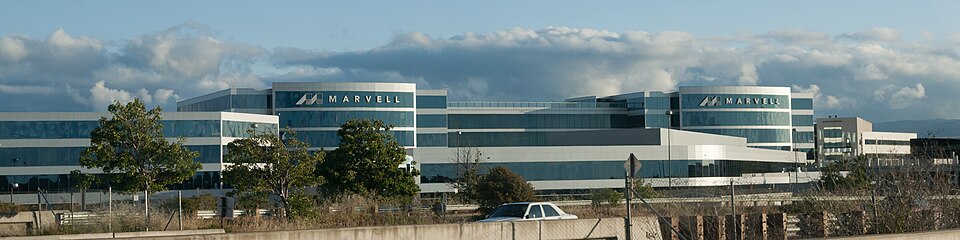
Marvell designs the networking chips, custom silicon, and connectivity solutions that move data between servers, storage arrays, and networking switches inside AI data centers. Think of it this way: if Nvidia builds the brains, Marvell builds the nervous system. And you can have the most powerful brain in the world, but without a nervous system to carry signals, it's just an expensive paperweight.
The company posted $2.4 billion in revenue in its most recent quarter, and here's the number that should make every investor pay attention: Marvell projects its custom chip business alone could generate over $10 billion in annual revenue by fiscal 2029. That's not total revenue -- that's just the custom silicon segment. The growth trajectory here is genuinely staggering.
I've been tracking semiconductor stocks for years, and I can tell you from personal experience that Marvell was one of the most frustrating stocks to own in 2024 and early 2025. The market kept treating it as a second-tier chip play while Nvidia and Broadcom got all the attention. I remember checking my portfolio on mornings when Nvidia was up 5% and Marvell was flat, thinking, "The market is sleeping on this one." Turns out Jensen Huang agreed with that assessment.
| Metric | Detail |
|---|---|
| Stock (MRVL) | +32.52% on June 2, 2026 -- all-time biggest single-day gain |
| Jensen Huang Quote | "The next trillion-dollar company" |
| Nvidia Investment | $2 billion in Marvell + photonic tech companies |
| Quarterly Revenue | $2.4 billion |
| Custom Chip Revenue Target | >$10 billion annual by fiscal 2029 |
| S&P 500 Close | Record 7,609.78 (first close above 7,600) |
The Nvidia-Marvell Partnership Could Reshape the Entire Chip Industry
Here's my honest take on why this matters beyond just one stock going up: Jensen Huang isn't just betting on Marvell -- he's signaling where the next bottleneck in AI infrastructure is going to be. And it's networking.

We've spent the last three years obsessing over GPU supply -- who can get the most H100s, who's building the biggest training clusters, who has the most compute. But as clusters scale from thousands to hundreds of thousands of GPUs, the data movement problem becomes just as critical as the compute problem. You can have 100,000 GPUs in a data center, but if the network connecting them creates bottlenecks, you're wasting half your compute budget on GPUs sitting idle waiting for data.
That's exactly the problem Marvell solves. Their custom chips and photonic interconnect technology are designed for exactly this scale. And with Nvidia investing $2 billion to deepen this relationship, it's clear that even the GPU king recognizes that the network layer is going to be a trillion-dollar market in its own right.
If you've been paying attention to how data-driven decision-making is transforming everything from Formula 1 racing strategy to financial markets, the Marvell story fits the same pattern: the companies building the infrastructure layer often end up being more valuable than the companies using it.
What the S&P 500's Record Close Tells Us About Market Sentiment
The S&P 500 hitting 7,609.78 -- its first close above 7,600 -- on the same day Marvell surged 32% is not a coincidence. This is the market telling you something about where conviction lies right now, and it lies squarely in AI infrastructure.
I've seen plenty of "AI rallies" over the past three years that turned out to be nothing more than hype-driven momentum trades. This one feels different. When Nvidia's CEO is willing to name a specific company and then back it with billions in investment, that's not hype. That's a roadmap. Jensen is essentially telling the market: "Here's where the next trillion dollars of value is going to be created, and I'm putting my money where my mouth is."
The broader market response validates this thesis. We're not seeing a narrow rally where three mega-cap stocks drag the index higher while everything else bleeds. The Marvell surge lifted the entire semiconductor sector, which in turn boosted the Nasdaq, which gave the S&P the momentum to clear 7,600. This is the kind of broad-based conviction that tends to sustain itself.
For anyone managing a personal budget and wondering how market rallies like this affect their financial planning, the connection between macro trends and individual finances is tighter than most people realize. Understanding how to track and manage your money becomes even more important when markets are making moves this big.
Can Marvell Actually Reach a Trillion-Dollar Valuation?
Let's do some rough math because I think the path is clearer than skeptics want to admit. Marvell is currently generating $2.4 billion in quarterly revenue, and their custom chip business alone is targeting $10 billion+ annually by fiscal 2029. If total revenue reaches $15-18 billion by that timeframe -- which isn't crazy given the growth trajectory -- and the market assigns a 15-20x revenue multiple (standard for a high-growth semi company with a dominant position in an expanding market), you're looking at a $225-360 billion valuation range.
That's not a trillion. But here's the thing Jensen Huang understands that most analysts don't: the AI infrastructure market isn't growing linearly. It's growing exponentially. Every new AI model is bigger. Every new data center has more GPUs. Every new GPU cluster needs more networking bandwidth. If the market grows faster than current projections -- which it has consistently done for three years straight -- then Marvell's growth curve bends upward too.
My personal view? The trillion-dollar call is aggressive for a 3-year timeframe but entirely plausible on a 5-7 year horizon. And given that Jensen just put $2 billion behind this thesis, I'm inclined to take it seriously. The man hasn't been wrong about a major technology trend in the last decade.
The biggest risk? Execution. Marvell needs to deliver on the custom chip roadmap, scale manufacturing, and maintain its technology lead against well-funded competitors. But with Nvidia as both a customer and an investor, the execution path just got a lot smoother.
Frequently Asked Questions
Why did Marvell Technology stock surge 32% on June 2, 2026?
Marvell Technology stock surged 32.52% -- its biggest single-day gain ever -- after Nvidia CEO Jensen Huang publicly called Marvell "the next trillion-dollar company" during his Computex Week keynote in Taipei. Nvidia also announced a $2 billion investment in Marvell and photonic technology companies.
What does Marvell Technology actually do?
Marvell designs networking, connectivity, and custom silicon chips essential for AI data center infrastructure. Their chips handle data movement between servers, storage systems, and networking equipment -- the plumbing that makes large-scale AI training and inference possible.
How much revenue does Marvell Technology generate?
Marvell posted $2.4 billion in revenue in its most recent earnings report. The company projects its custom chip business alone could generate over $10 billion in annual revenue by fiscal year 2029, driven by surging demand for AI data center infrastructure.
Is Marvell Technology a good investment after the 32% surge?
That depends on your risk tolerance and time horizon. The Jensen Huang endorsement and Nvidia's $2B investment provide strong validation, and the $10B custom chip revenue target for fiscal 2029 suggests significant growth ahead. However, a 32% single-day move means much of the near-term upside may already be priced in. This is not financial advice.
What is Nvidia's connection to Marvell Technology?
Nvidia and Marvell are complementary rather than competitive. Nvidia builds the GPUs that power AI computation, while Marvell builds the networking and custom chips that connect those GPUs and move data through data centers. Nvidia invested $2 billion in Marvell and photonic tech companies, deepening this strategic relationship.