Scientists Just Connected a Time Crystal to the Real World — And It's Wild
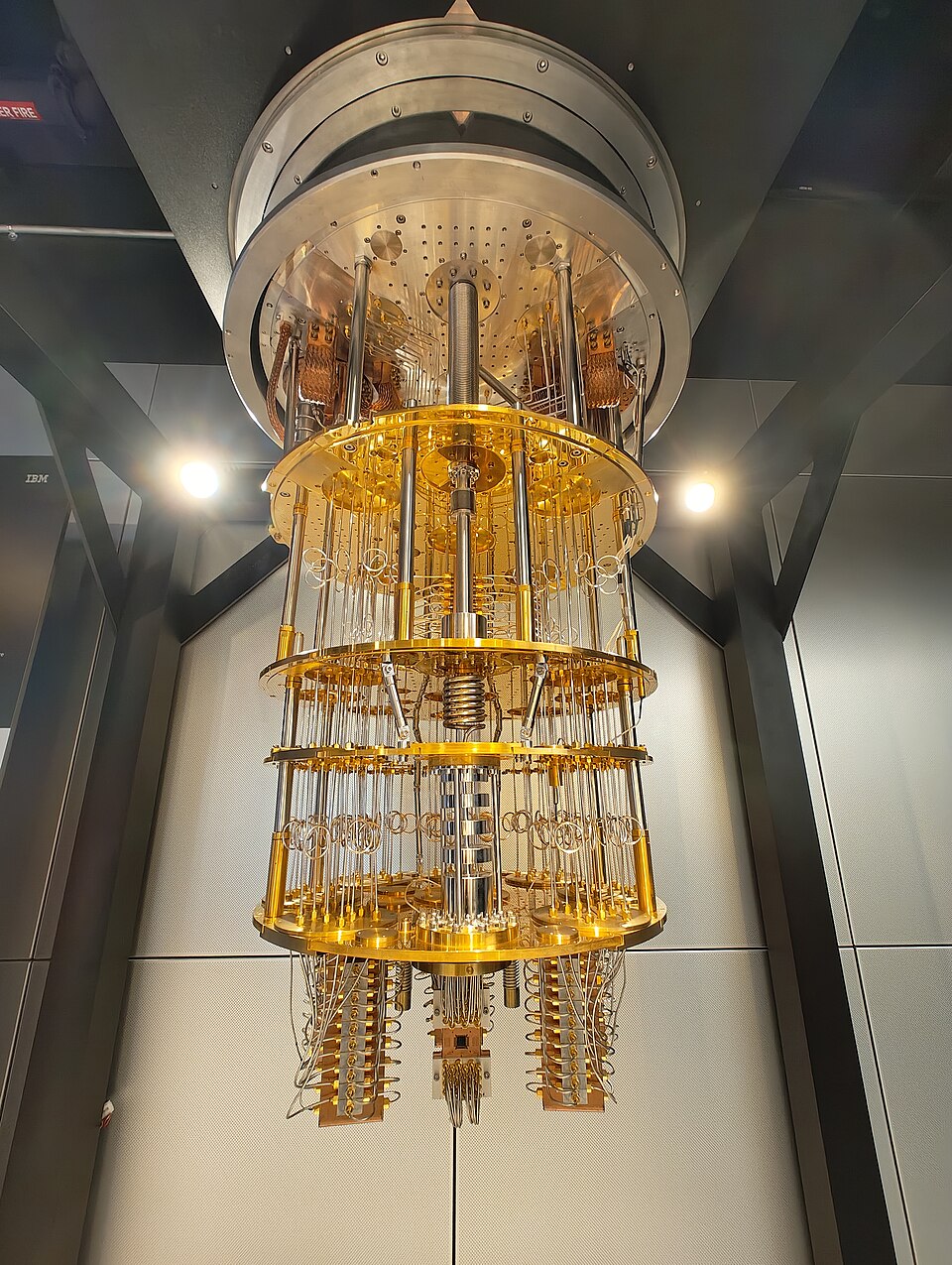
Researchers at Aalto University in Finland have connected a time crystal to an external device for the first time ever, led by physicist Jere Makinen. A time crystal is a quantum system that repeats motion endlessly without using energy. This breakthrough opens the door to practical applications including quantum computer memory, ultra-precise sensors, and frequency combs — and 2026 is shaping up to be the year time crystals went from theory curiosity to engineering reality.
What Even Is a Time Crystal and Why Should You Care?
I'm going to be honest: the first time I heard the phrase "time crystal," I assumed it was from a video game. It sounds like something you'd collect to power a portal in a fantasy RPG. But time crystals are real, they're one of the weirdest things in all of physics, and what just happened in Finland is a genuinely big deal.
Here's the simplest way I can explain it: normal matter, at its lowest energy state, sits still. A ball at the bottom of a hill doesn't move. That's the ground state — minimum energy, no motion. A time crystal breaks this rule. Its ground state involves perpetual oscillation. The particles inside it tick back and forth in a repeating pattern, forever, without consuming energy. It's not perpetual motion in the free-energy scam sense — you can't extract useful work from it. But it is genuine perpetual motion at the quantum scale, and it shouldn't be possible under our old understanding of physics.
Nobel laureate Frank Wilczek proposed time crystals theoretically in 2012. The physics community mostly scoffed. By 2017, two independent labs had created them. By 2021, Google's quantum computing team built one on a quantum processor. And now, in 2026, Aalto University has done something nobody had managed before: they made a time crystal talk to the outside world.
What Did the Aalto University Team Actually Do?
This is the part that gets me genuinely excited, because it's the difference between a scientific curiosity and a potentially useful technology. Previous time crystals existed in isolation — beautiful but useless, like a snow globe you can't open. Jere Makinen and his team at Aalto University figured out how to connect a time crystal to an external quantum device while keeping the crystal's perpetual oscillation intact.
Think of it like this: imagine a clock that runs forever without batteries. Previously, looking at the clock made it stop. Now they've found a way to read the time without interrupting the mechanism. That's a crude analogy, but it captures the essence of why this is such a leap forward.
The technical details involve superfluid helium-3 cooled to near absolute zero — we're talking temperatures colder than deep space. The time crystal forms in the superfluid, and the team coupled it to an external resonator that could detect and respond to the crystal's oscillations. The crystal kept ticking. The resonator picked up the signal. Information flowed out without destroying the source. That's never happened before.
What Could Time Crystals Actually Be Used For?
I've been tracking quantum computing developments for years now, and I've developed a healthy skepticism for "breakthrough" announcements. Most of them are incremental steps dressed up in press-release language. But this one has me genuinely optimistic, and here's why: the practical applications are concrete enough to name.
| Application | How Time Crystals Help |
|---|---|
| Quantum Memory | Perpetual oscillation = information stored without decay. Current quantum bits lose coherence in microseconds. A time crystal could hold state indefinitely. |
| Precision Sensors | The perfectly regular oscillation acts as an ultra-sensitive detector for tiny perturbations — gravitational waves, magnetic anomalies, molecular vibrations. |
| Frequency Combs | Time crystals could generate perfectly spaced frequency references for communications, GPS, and atomic clocks. |
| Quantum Error Correction | The inherent stability of time crystals could serve as a reference oscillator for correcting quantum computation errors. |
The quantum memory angle is what I find most compelling. Decoherence — the tendency of quantum states to fall apart when they interact with the environment — is the single biggest obstacle in quantum computing. Every quantum computer in existence fights a constant battle against decoherence. A time crystal, by definition, maintains coherence forever. If you can store quantum information in a time crystal and retrieve it without destroying the crystal, you've potentially solved one of the hardest problems in the field.
What Else Is Happening in Time Crystal Research in 2026?
Aalto isn't the only team making moves. 2026 has been an absurdly productive year for time crystal research — it feels like the field hit some kind of critical mass where multiple groups are racing toward applications simultaneously.
- NYU levitating time crystals: Researchers at New York University created time crystals in levitating particles, removing the need for ultra-cold temperatures. This is huge for accessibility — if time crystals can work at higher temperatures, they become dramatically easier to engineer into real devices.
- 2D discrete time crystal on 144 qubits: A separate team built a two-dimensional discrete time crystal on a 144-qubit quantum processor. Previous time crystals were one-dimensional. Moving to 2D means more complex information storage and more robust error resistance.
When I look at these three developments together — external connectivity (Aalto), room-temperature potential (NYU), and scalability (the 144-qubit experiment) — I see a technology that's transitioning from "fascinating physics" to "engineering challenge." Those are very different phases, and the second one tends to move much faster than the first.
My Honest Take on Where This Is Headed
I've been burned before by quantum computing hype. I remember when quantum supremacy was achieved in 2019 and everyone acted like practical quantum computers were five years away. They weren't. We're still waiting. So I want to be careful about over-promising what time crystals will deliver.
But here's what I genuinely believe: we're going to look back at 2026 as the year time crystals became real technology rather than laboratory oddities. The Aalto breakthrough is the key piece — proving that time crystals can interact with external systems without collapsing. Everything else is engineering. Hard engineering, sure. But engineering problems get solved. Fundamental physics problems sometimes don't.
If you're interested in other technology stories shaping 2026, read about how Boston Dynamics connected Atlas to Google Gemini — another case of a lab curiosity becoming a practical tool. Or check out the staggering numbers behind Big Tech's $725 billion AI spending spree to see where the money is flowing in tech right now.
Frequently Asked Questions
What is a time crystal?
A time crystal is a quantum system whose particles repeat a pattern of motion endlessly without consuming any energy. Unlike normal matter that sits still at its lowest energy state, a time crystal oscillates forever — breaking the symmetry of time itself.
What did Aalto University researchers achieve with time crystals?
Led by Jere Makinen, the Aalto University team connected a time crystal to an external device for the first time, allowing it to interact with the outside world while maintaining its perpetual oscillation. This is the first step toward practical applications.
How could time crystals be used in quantum computing?
Time crystals could serve as quantum memory that maintains coherence indefinitely, precision sensors for measuring extremely weak signals, and frequency combs for ultra-precise timekeeping. Their ability to oscillate without energy loss makes them ideal for fighting decoherence — quantum computing's biggest enemy.
Are time crystals a perpetual motion machine?
No. Time crystals oscillate perpetually at their lowest energy state, but you cannot extract energy from them to do useful work. They don't violate thermodynamics — they exist in a ground state that happens to involve motion rather than stillness.
What other time crystal breakthroughs happened in 2026?
NYU researchers created levitating time crystals, and another team built a 2D discrete time crystal on a 144-qubit quantum processor. Combined with Aalto's work on external connectivity, 2026 has been a landmark year for time crystal research.